Animating Eadweard Muybridge’s image of jaguars in Animal Locomotion, 1887. 2025
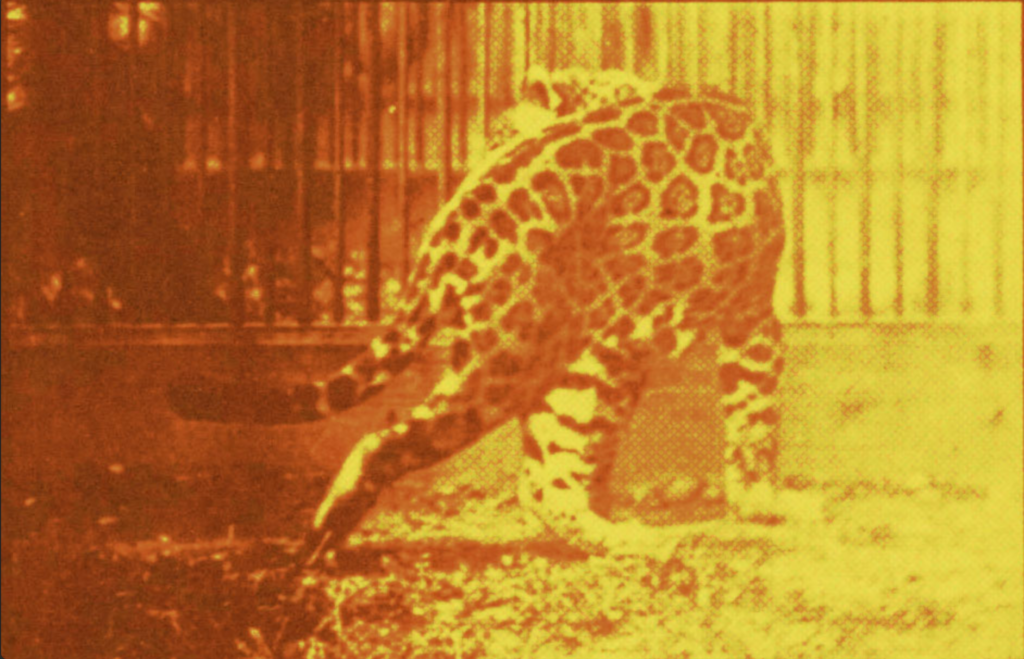
Focus on Simara and Aramis stereotypical behavior, 2025-2026.
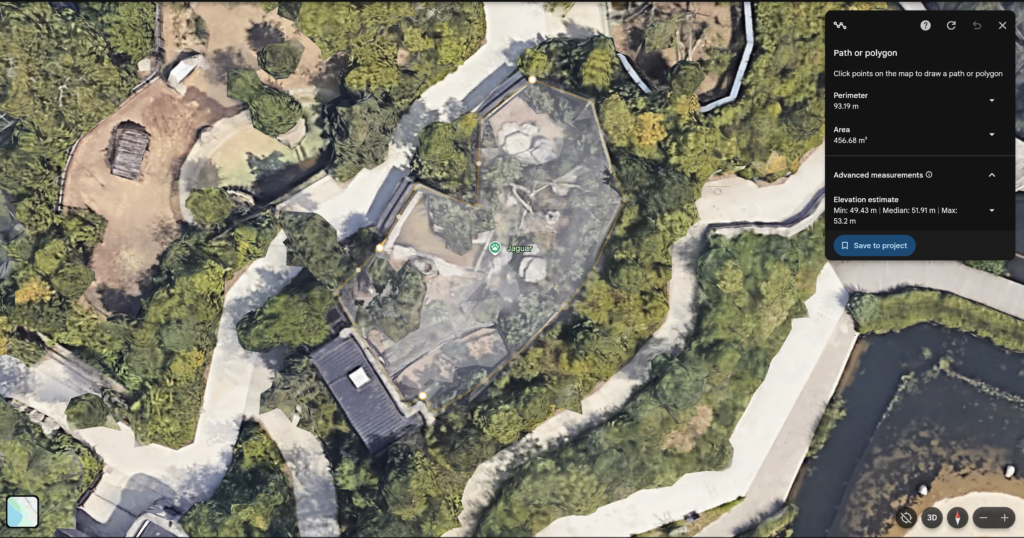
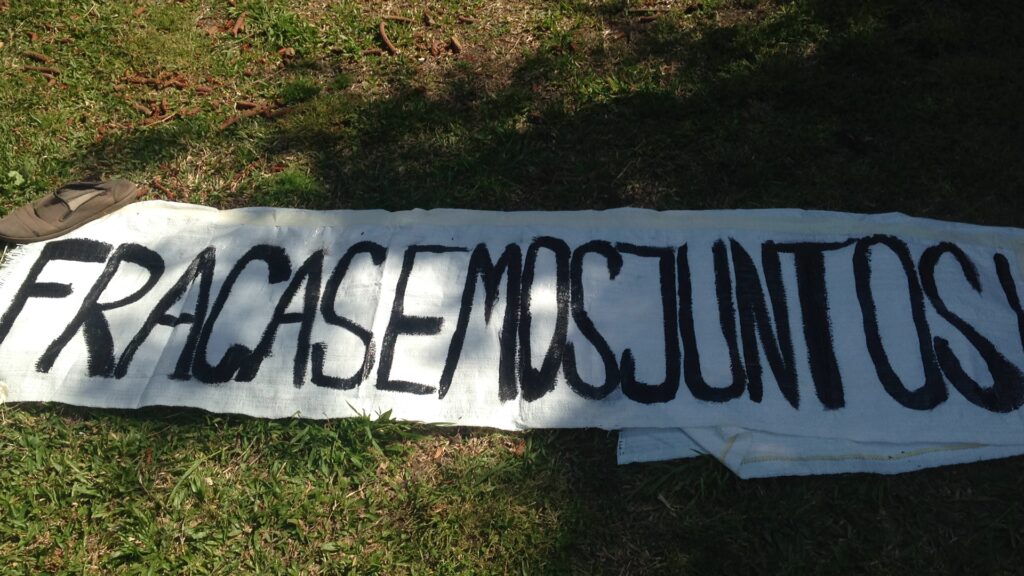
Let’s Fail Together! Going (not) to see non-human animal slavery at the zoo, it’s a publication not yet to be shared regarding a case of study of two jaguars in an european zoo. Both of them have a large genealogical tree in Europe, and are workers (slaves) of the Zoo, under the precepts of conservation ex-situ, while their bodies don’t stop manifesting against their role of represent the tropical jaguars behavior in freedom. We lack to be aware of their poor life conditions.
This is just one of the several failures this edition try to point out.
Eager to share more with you soon.
Jaguar worlds / Traces of extinction is an ongoing research project investigating what might remain as naturocultural heritage if jaguars were to disappear. The project begins from a limit: we cannot access another species’ subjective world, yet we can develop situated tools—methods, questions, and perceptual devices—to approach that limit without claiming to overcome it.
The research combines two strands. First, a historical-bibliographic inquiry traces jaguar “occurrences” across printed archives: colonial narratives, naturalist expeditions, ethnological research, literature, and mediated encounters with non-Western cosmologies. This strand maps how jaguars have been named, framed, and brought to existence through human narratives—what would survive them as text, image, and myth. Second, field-based work unfolds in different dimensions and places. With scientist and indigenous leader Dzoodzo Baniwa at the Santa Isabel do rio Ayari Baniwa and Korripako communities, (Departamento Sao Gabriel da Cachoeira, Alto Rio Negro, Brazil). we’ll develop an inquiry on the human-jaguar transformations and it’s sensorial world, ways of inhabiting the territory, dreaming, etc. Artist from the communities of the area are invited to address artworks to jaguars in freedom in Pantanal. Sadly, there’s not that many occurrences of jaguars nowadays as before, so this is a posssibility to readress something back to jaguars.
Along with Anne-Lise Dauphiné-Morer in tight collaboration with ONG Panthera Brasil (Dr. Roberto Salom-Peres, Ferndando Tortato), we will address, trough art-works, questions regarding what we have said about them.
The aesthetic experience of a jaguar will be studied understanding this in a larger way (as aesthesis, knowledge based embodied, and sensorial information of the world), through the ethological and artistic display that we’re conceiving. Testing attention protocols and translation between observation, recording, and exhibition-making this ongoing research will present several outputs that I’ll be eager to share with you soon.
The project is supported by a FRArt–FNRS research grant and is developed through interdisciplinary and intercultural dialogue’s including Valeria González, Claudia Fontes, Silvio Marchini, Thomas Brignon, Vincent Hirtzel, Thibault de Meyer, Anne-Lise Dauphiné-Morer, Dzoodzo Baniwa, among others).